Skydiving is on a lot of Vegas bucket lists, and the desert around the city is actually a popular place to jump out of a real plane. But real skydiving requires good weather, a full half-day commitment, and the willingness to hurl yourself out of a door two miles above the ground. Indoor skydiving strips all of that away and leaves just the best part: the floating, weightless sensation of freefall, delivered in a controlled vertical wind tunnel, fully indoors, in about 20 minutes.
Here is everything you need to know before you book a flight at Vegas Indoor Skydiving.
How Does Indoor Skydiving Work?
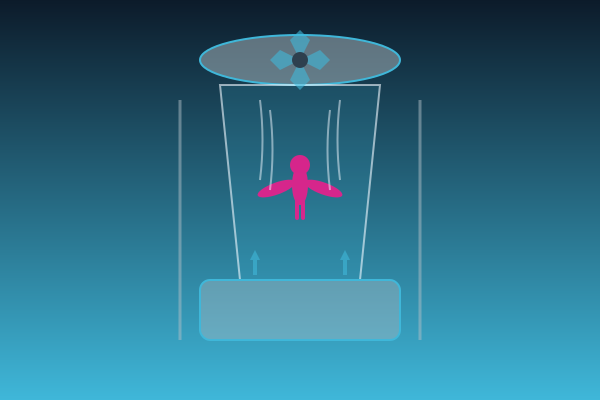
The technology is straightforward in concept and impressive in execution. A vertical wind tunnel generates a column of air moving upward at roughly 120 mph — the same speed a human body falls during skydiving. Step into the column and you float, supported entirely by the air pressure. The sensation is remarkably close to the freefall portion of a real skydive, without the plane ride, the parachute, or the ground rushing at you.
Las Vegas has indoor skydiving facilities that use this vertical wind tunnel technology. The specific operator and location can vary, so verify current details when booking — but the core experience is consistent: training, gearing up, and two to four flights in the tunnel, each lasting about a minute.
A minute of freefall sounds short until you are in it. One minute in the wind tunnel is longer than the freefall portion of most real skydives, and it is intense enough that most first-timers come out grinning and slightly winded.
What the Experience Is Like
The experience follows a clear arc:
- Check-in and waiver. Arrive 15 to 30 minutes early to sign waivers and get oriented.
- Training session. A brief class covers body position, hand signals (you cannot hear anything inside the tunnel), and safety rules. The instructor demonstrates the arch position that keeps you stable in the air.
- Gear up. You are given a flight suit, helmet, earplugs, and goggles. Wear lace-up shoes and comfortable clothes underneath.
- The flight. You enter the tunnel with an instructor present at all times. Most packages include two flights of about 60 seconds each. The instructor helps you find the right body position and catches you if you drift.
- Debrief. After your flights, you can watch video footage and, optionally, purchase photos or videos.
The entire experience, start to finish, takes about 45 to 60 minutes, though your actual time in the tunnel is short. The rest is training, gearing up, and watching other flyers.
How Much Does It Cost?
Indoor skydiving is not cheap, but it is far less expensive than a real skydive and requires no travel to a remote dropzone. Typical pricing:
| Package | Typical Price | What's Included |
|---|---|---|
| First-time flyer (2 flights) | $70–$90 | Training, gear, 2 flights |
| Extended package (4 flights) | $110–$140 | Training, gear, 4 flights, video |
| VR skydive upgrade | Add $20–$40 | Virtual reality headset simulates a real jump |
| Video/photo package | $15–$35 | Digital footage of your flights |
Look for Online Discounts
Indoor skydiving operators frequently run online promotions and appear on discount sites. Booking directly through the operator's website is usually cheaper than walking up, and multi-flight packages offer better per-flight value than the basic two-flight deal. If you are flying with a group, ask about group rates.
Who Can Do It?
One of the best things about indoor skydiving is its accessibility. You do not need to be athletic, brave, or in peak physical condition. The wind does the work; you just hold a body position. Age requirements are generous — children as young as 3 can fly at most facilities, and there is typically no upper age limit. Weight limits apply (usually around 250–300 lbs depending on the facility), and people with certain shoulder or back injuries should consult a doctor first.
This makes indoor skydiving one of the better family-friendly adrenaline activities in Las Vegas. Kids who cannot gamble, drink, or enter nightclubs can absolutely fly in a wind tunnel, and it is a genuine shared experience rather than a kiddie ride parents endure.
What to Wear
- Lace-up sneakers. Required. No sandals, no heels, no slip-ons.
- Comfortable clothes. You will wear a flight suit over your clothes, so avoid bulky items. T-shirts and pants are ideal.
- No jewelry. Remove rings, watches, and necklaces before flying.
- Long hair tied back. The wind will whip loose hair everywhere.
- Empty your pockets. Anything in your pockets will fly out in the tunnel. Lockers are provided.
Indoor vs. Outdoor Skydiving
If you are deciding between the two, here is the honest comparison:
- Cost: Indoor is cheaper — $70–$140 vs. $200–$400 for a real tandem jump.
- Time: Indoor takes an hour; outdoor takes a half-day including travel to the dropzone.
- Weather: Indoor is unaffected by weather; outdoor jumps get cancelled by wind and clouds.
- The view: Outdoor skydiving over the desert is genuinely spectacular and cannot be replicated indoors.
- The sensation: The freefall feel is very similar. The plane ride, the jump, and the canopy glide are unique to outdoor.
- Fear factor: Indoor has essentially none. Outdoor has, well, the part where you jump out of a plane.
If you want the thrill of freefall without commitment, weather risk, or terror, indoor is the clear choice. If you want the full life-experience of an actual skydive, nothing but the real thing will do.
Is It Worth It?
For most visitors, yes — especially if you are traveling with family or want an adrenaline hit that does not eat half a day. Indoor skydiving is a concentrated, reliable, weather-proof adventure that delivers a genuine freefall sensation. It is more expensive per minute than almost any other Vegas activity, but the experience is genuinely unique and memorable. Pair it with other indoor attractions for a full air-conditioned adventure day, or combine it with a visit to Area15 for a double dose of immersive thrills.
For a different kind of cooling adrenaline, the Minus5 Ice Bar offers a different sort of chill. And if you are planning a summer visit, indoor skydiving is a smart way to get your heart rate up without stepping into the heat — see our cooling off on the Strip guide for more heat-beating strategies.